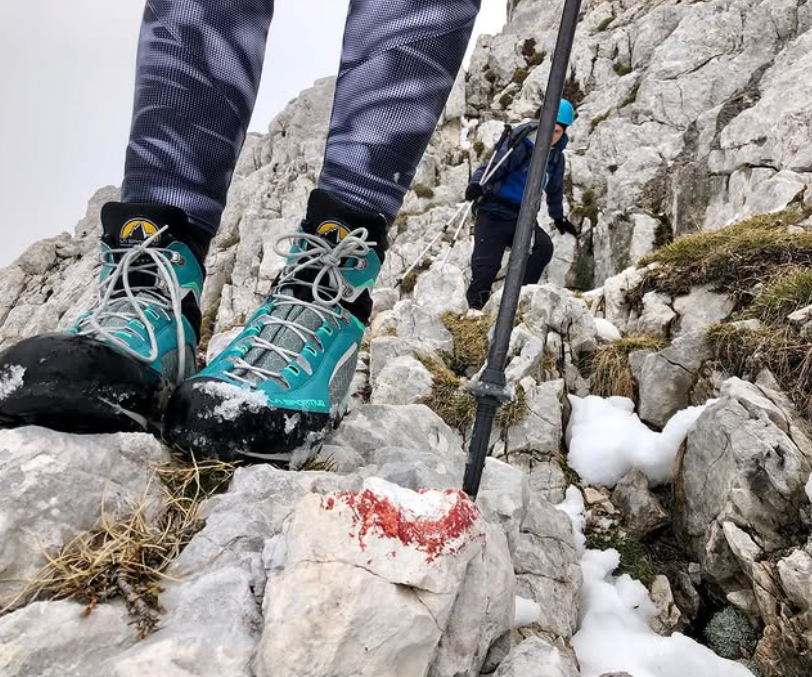
When hiking, the most important piece of equipment is probably the shoe. But unfortunately, we often give it far too little love and attention, even though it is actually quite low-maintenance. With regular care, you can extend its lifespan and maintain comfort.

- If the shoe is heavily soiled, remove the insole and laces, then clean the shoe thoroughly inside and out under running water with a very small amount of soap and a brush.
- Stuff with newspaper and let dry at room temperature.
- Apply a waterproofing spray while the shoe is still slightly damp.
- Wax dry leather shoes - ideally by hand. Leave out the toe rand and sole. Waxing changes the look, especially with suede, and the leather becomes smooth and darker. If you do not want that, avoid waxing suede. Full-grain leather shoes should also be cared for on the inside, e.g. with leather cream or even regular Nivea cream. This keeps the shoe soft and flexible.
Sharp as a knife
Tip: Did you know that wet, tall grass is the biggest enemy of hiking boots? The sharp blades of grass are very hard on the leather and waterproofing. So be sure to care for them, especially after crossing a wet meadow with grass as high as your boots!
The Inner Values
Not only hiking boots develop a typical odor when worn frequently - ski boots and climbing shoes are also known for this. Our tip: instead of masking the smell with a spray, the 2nd Peak team swears by "Fresh Cheese". These are microbacteria in powder form that break down the foul-smelling sweat bacteria. Sprinkle a small amount in before and/or after wearing - done.
Resoling
Anyone who cares for their shoes regularly can hike in them for years and may only ever need to replace the sole. Most good cobblers do this for around 120 - 150 francs. As a rule, you can also have the shoes resoled by a specialist retailer or directly by the shoe brand.
Resoling makes particular sense for the so-called welted or double-stitched shoes, because they are generally more expensive, more elaborately made, and more durable. In welted shoes, the upper is attached to the underside of the insole. This can sometimes be seen when removing the insole.

Double-stitched shoes can be recognized by the double seam that runs around the outside of the shoe.

SAC Bern members receive 10% off purchases upon presentation of their ID card and, when selling, 1/3 instead of 1/4 of the selling price from 2nd Peak. The share is paid out immediately upon purchase.